
Broken Equipment: Sell, Repair, Part Out or Scrap? How to Choose
Compare complete sale, repair, part-out and scrap using expected net value, time, storage, transport, demand and the cost of being wrong.
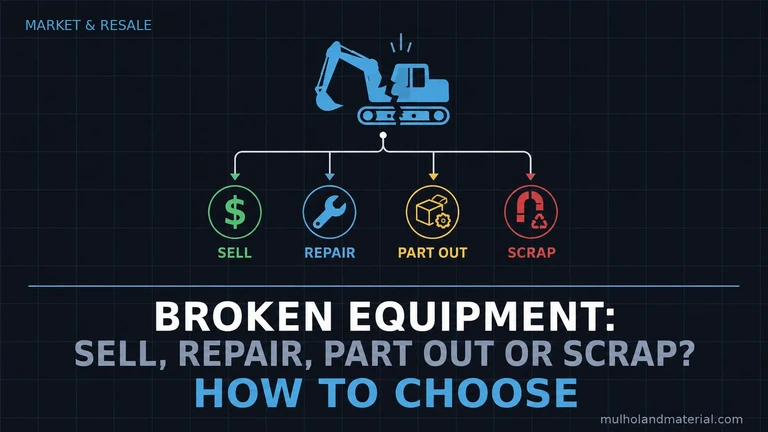
Broken equipment creates a weird psychological trap: once it is yours, every component starts looking like future money. That does not mean there is a buyer.
Four exits
| Exit | When it tends to work | Hidden cost |
|---|---|---|
| Sell complete as-is | Unit is complete, identifiable and repairable by someone | Lower headline price |
| Repair and sell | Fault is diagnosed, parts available, margin survives repair | Diagnostic and comeback risk |
| Part out | Several components have independent demand and are easy to store/ship | Time plus leftover carcass |
| Scrap/core | Demand is weak, structure is damaged, parts are not moving | Lowest upside |
Use expected net value, not maximum fantasy value
A part that can theoretically sell for $300 is not worth $300 to you if it has a 20% chance of selling this year and costs time to remove, list, store and ship.
A useful mental model is:
Expected net = sale proceeds × probability of sale − labor − fees − shipping/transport − storage cost − disposal cost of leftovers.
Why as-is complete sale is underrated
Complete machines preserve compatibility information. A repair shop or experienced buyer can see the model, configuration and missing pieces. Once you strip the obvious parts, you may destroy the easiest exit for the remainder.
When part-out actually makes sense
- Known model with a large installed base.
- Controls, charger, handle assembly, wheels, pump or other components have verified replacement demand.
- Parts can be tested before sale.
- The valuable pieces are compact enough to store or ship.
- You already know where the leftover steel goes.
Scrap is a floor, not a moral failure
If the unit is structurally damaged, obsolete, incomplete and taking up expensive space, a clean scrap/core exit can be better than spending six months trying to squeeze another $80 out of it.
Sources & verification
Manufacturer/primary sources are preferred where available. Prices and product listings can change; specifications should be checked again before a real purchase or transport decision.
Comments
Loading comments…